


Chicken kebab, or kebab made with chicken, is a modern answer to the needs of foodservice businesses looking to combine the popularity of street food with the appeal of crispy chicken. There is no need to invest in a specialist rotisserie or serve kebab made with traditional beef or lamb. Breaded chicken is an excellent fit for kebabs, offering a distinctive texture, easy portioning and a way to expand the menu without any additional investment – both for dishes served on-site and for delivery.
For restaurant owners and operators, breaded chicken kebab is particularly attractive for one reason: it does not require the creation of an entirely new concept. A venue that already serves chicken strips, nuggets or breaded wings can use the same product base, chicken breading mix and ready-made coating mixes to offer customers a new dish in a familiar and well-loved format.

Chicken kebab – benefits for operators
This is the biggest advantage for operators: a new menu item can be created using products and processes that are often already available in the kitchen..
- Opportunity for a quick market test – chicken kebab can initially be introduced as a limited-time special or a meal deal.
- Delivery-friendly format – a tortilla wrap, bread roll, pitta or box works well for takeaway and delivery.
- Easier portion standardisation – chicken pieces can be weighed and portioned according to a set specification.
- Makes use of existing ingredients and equipment – chicken fillets, marinades, coating mixes, fryers, vegetables and sauces can all be used in another menu item.
- No additional investment in rotisserie equipment – there is no need to purchase a vertical rotisserie or create a dedicated kebab station.
Why choose breaded chicken kebab instead of a traditional doner kebab?
What is chicken kebab?
Chicken kebab is a dish made with chicken and served in a kebab-style format, most commonly in a bread roll, tortilla wrap or pitta bread, with vegetables, sauces and seasonings.
This dish works particularly well in venues whose menus are built around breaded chicken. Breaded chicken kebab combines juicy chicken, a crispy coating and a convenient – as well as highly popular – serving format. As a result, it can be offered as a standalone menu item, as part of a meal deal with chips and a drink, or as an excellent takeaway option.

Traditional chicken kebab recipes
Traditional chicken kebab recipes originate mainly from Middle Eastern and Turkish cuisine. Discover the origins of this popular dish and see how, with our tips, you can simplify the process of preparing chicken kebab and turn it into a new bestseller on your menu.
| Type of kebab
| Description |
| Chicken tikka kebab | An Indian-style kebab in which pieces of chicken are marinated in yoghurt and spices before being grilled on skewers. |
| Greek-style kebab (souvlaki) | Marinated pieces of chicken, grilled and served with bread, salad and tzatziki sauce. |
| Doner kebab | A popular type of kebab in which chicken is cooked on a vertical rotisserie and served in pitta bread with vegetables and sauce. In Turkey, traditional döner kebab is most commonly made with lamb or chicken. |
Where is chicken kebab likely to be most successful?
Customers of fast-casual restaurants value meals that are quick, filling and easy to take away. Kebab ticks all of these boxes, while chicken kebab also caters to growing demand for premium chicken products – crispy, juicy and served with customers’ favourite toppings
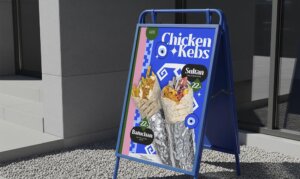
Chicken kebab allows operators to expand their menu without making major changes to their kitchen operations. It can be successfully introduced in chicken shops, food trucks, burger restaurants, bistros, pizzerias and fast-casual dining venues.
Why breaded chicken is an ideal base for kebabs?
American style chicken gives operators a practical advantage: it combines crispness, juicy meat and a convenient serving format without the need to adopt the traditional doner kebab cooking method.
Traditional kebab is typically associated with meat sliced from a rotating spit cooked on a vertical rotisserie. However, for many foodservice businesses, introducing this method of preparation can be challenging due to the space required for the equipment and the cost of investment. That is why breaded chicken offers a more practical and flexible solution for kebabs.
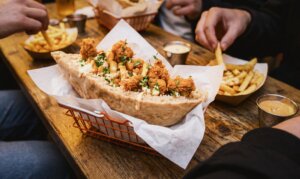
Chicken kebab – the foundation of a great kebab is already in your kitchen
However, that is not the only reason why chicken kebab is worth considering.
Breaded chicken creates a distinctive contrast of textures. Soft bread, fresh vegetables, a creamy sauce and juicy chicken coated in a perfectly crispy coating come together to create a combination that is appealing from the very first bite. This is important because, in street food, it is not only flavour that matters but also the overall eating experience.
Breaded chicken is also highly versatile. The same chicken pieces can be used in kebabs, burgers, wraps, boxes, salads or meal deals. For operators, this means simpler purchasing, easier staff training and greater control over food costs.

Chicken kebab recipe: how to introduce it to your menu?
The easiest way to introduce chicken kebab is to build it around the same ingredients and processes already used to prepare breaded chicken strips, wraps, burgers or boxed meals.
In a kebab, the meat should not be treated as an extra but as the star of the dish. That is why, in a chicken kebab, the meat should be exceptionally juicy, while the coating should be visibly craggy and irresistibly crispy. Chicken prepared using Holly Powder products delivers exactly that – a bold and distinctive centrepiece that brings the entire dish together.

1. Prepare the breaded chicken
Start by preparing the chicken. Cut the chicken breast fillet into smaller pieces weighing approximately 25–30 g each and marinate them. Some believe that chicken kebab requires a flavourful marinade made with yoghurt or onion juice, but chicken can be marinated in a much simpler and quicker way. Simply use a ready-made Holly Powder marinade, which provides the meat with the right flavour and juiciness while also speeding up preparation and simplifying the entire process.
Once the chicken pieces have been marinated, coat them according to the instructions developed by Holly Powder. As a coating manufacturer, we understand not only the products themselves but also the techniques required to prepare exceptional breaded chicken. By following our method, you can achieve consistently satisfying results – tender, juicy chicken with a crispy, golden and craggy coating.
In practice, it is worth carrying out a test using your own equipment to assess the size of the chicken pieces, frying time, oil temperature and how the coating performs several minutes after serving. As a guide, many operators test frying chicken at 170–180°C for around 3.5 minutes, although the final settings should always be determined by the portion size, fryer performance and the venue’s internal HACCP procedures.
2. Choose your serving format
Chicken kebab can be served in several different ways:
- In a bread roll – as a filling fast-food meal that works well as part of a meal deal.
- In a tortilla wrap – a convenient option for takeaway and delivery.
- In pitta bread – a more traditional kebab format.
Choose the serving format that best suits your business and whether you plan to serve the dish for dine-in customers, takeaway or delivery. You can also give customers a choice, allowing them to decide which type of bread they prefer..
3. Adjust the chicken portion size
A good chicken kebab should be filling without being overloaded. The amount of chicken used is therefore crucial. Too little will reduce the dish’s perceived value, while too much can make it difficult to eat and increase costs. It is worth testing several portion sizes to find the right balance between taste, convenience and profitability.
| Variant | Recommended chicken portion | Menu application |
| Basic | approx. 120 g | Quick lunch option, food truck menu, value-for-money offering |
| Standard | approx. 150 g | Core menu offering for chicken shops, bistros and fast-casual venues |
| XL / Premium | approx. 180 g | Larger portion, premium meal deal or an option for customers with a bigger appetite |
Treat these portion sizes as a starting point for testing. The final portion should be determined by the selling price, ingredient costs, the size of the bread, the quantity of toppings and your target food cost.
4. Design your sauces
The sauce in a chicken kebab should complement the chicken rather than overpower it. Its role is to enhance the flavour. A yoghurt-based sauce is often the best choice, but garlic, spicy, herb, BBQ or mildly sweet-and-spicy sauces also pair well with breaded chicken. It is worth offering at least two options: one mild and one with a bit more heat.
5. Pay attention to vegetables and texture
Fresh vegetables work perfectly with breaded chicken. Lettuce, cabbage, cucumber, tomato, onion and pickles add freshness and balance to the dish. You can also combine the vegetables into a fresh slaw. For takeaway orders, it is particularly important to keep wetter ingredients separate from the chicken or to layer the ingredients carefully. You can also add chips or other sides to help your dish stand out from the competition.
Before adding the dish to your permanent menu, carry out a delivery test. Package the chicken kebab exactly as it would be delivered to the customer and assess its appearance, temperature, crispness and ease of eating after 10, 20 and 30 minutes. This is a simple way to check whether the amount of sauce, the layering of ingredients and the packaging affect the overall quality of the dish.

What makes a great chicken kebab?
A great chicken kebab is more than simply chicken wrapped in a tortilla. It is a carefully balanced combination in which every component serves a purpose.
The key characteristics of a good chicken kebab are:
- Crispy chicken – the coating should be clearly defined, golden and pleasingly crunchy.
- A juicy centre – the chicken should remain moist, even several minutes after serving.
- Balanced sauce – the sauce should bring the ingredients together without overpowering the coating.
- Fresh toppings – vegetables should add freshness, lightness and contrast.
- Consistency – every portion should look and taste the same.
- Ease of eating – the dish should work equally well for dine-in, takeaway and delivery
Chicken kebab as a way to grow sales
From a business perspective, chicken kebab can serve several purposes. It can act as a new menu item that attracts the attention of existing customers. It can also increase average order value when offered as part of a meal deal with chips, a drink or a lunch menu. In addition, it can help operators enter the delivery market, where dishes that travel well have a significant advantage.
Importantly, breaded chicken kebab makes use of ingredients that are often already available in the kitchen, including chicken, coating mixes, sauces, vegetables, tortilla wraps and bread rolls. As a result, introducing it to the menu does not require additional investment or any major changes to kitchen operations.
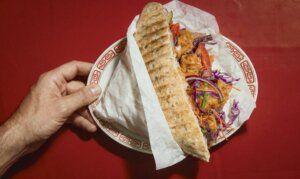
Portion sizes, food cost and meal deals – practical tips
A chicken kebab should be designed not only with flavour in mind, but also from a commercial perspective. This means defining the portion size, selling price, target food cost and its suitability for inclusion in a meal deal.
In many foodservice businesses, the target food cost for fast-food dishes typically falls within the 25–35% range. However, the exact figure will depend on ingredient purchase prices, chicken portion size, bread costs, packaging, delivery commission fees and the venue’s pricing strategy.
One effective sales strategy is to offer a meal deal consisting of a chicken kebab, chips, a drink and an optional sauce. This format makes upselling easier, increases average order value and allows customers to choose a complete meal rather than a single item.
| Format | Recommended chicken portion | Sales potential | Operational consideration |
| Chicken kebab wrap | approx. 120–150 g | Lunch, delivery, high-volume sales | Consistent wrapping is essential |
| Chicken kebab in a bread roll | approx. 150 g | Meal deal with chips and a drink | Showcases the coating well |
| Chicken kebab box | approx. 150–180 g | Takeaway sales, higher basket value | Easy to add chips and sauce |
| Chicken kebab platter | approx. 180 g | Main meal option | Higher selling price and more accompaniments |
Common mistakes when introducing chicken kebab to your menu
The most common issues with chicken kebab are not caused by the concept itself, but by a lack of portion standardisation, excessive use of sauce, overly wet toppings and the failure to carry out delivery testing.
- Too much sauce – can soften the coating and overpower the flavour of the chicken.
- Overly wet vegetables – particularly tomatoes, heavy slaws or undrained pickles, which can negatively affect the texture of the dish.
- No post-packaging test – before launching the product, it is worth assessing its quality after 10, 20 and 30 minutes.
- Eyeballing portions – makes food cost control more difficult and leads to inconsistencies between portions.
- An overly complex launch menu – it is better to start with two or three versions and expand the range after analysing sales performance.
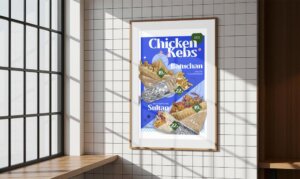
How to describe chicken kebab on your menu?
The menu description should clearly communicate the crispness of the coating, the type of chicken used, the toppings and the sauce. Customers should immediately understand that they are ordering a breaded chicken kebab rather than a traditional doner.
Example names: Crispy Chicken Kebab, Crispy Breaded Chicken Kebab, Chicken Kebab Box, Golden Crispy Chicken Kebab
Example description:
Juicy pieces of chicken in a crispy golden coating, served with fresh vegetables and a choice of garlic or spicy sauce in a tortilla wrap, bread roll or kebab box with chips.
Chicken kebab – more than just a trendy snack
Chicken kebab is not a passing trend but a practical way to expand the menu of a business that already works with chicken or is looking to enter the crispy chicken category. It combines the popularity of kebabs, the convenience of street food and the simplicity of preparing breaded chicken.
For owners of chicken shops, restaurants, food trucks and fast-food outlets, breaded chicken kebab can be an easy way to introduce a new menu item without complicating kitchen operations. The key is having the right foundation: juicy chicken, a crispy coating, consistency and ease of preparation.
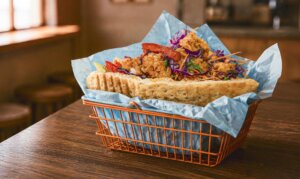
Holly Powder provides exactly that foundation – a coating system that makes it possible to create golden, crispy chicken and use it across a wide range of dishes, from chicken strips to chicken kebabs. If you run a food business and are looking for a new sales opportunity, breaded chicken kebab could become one of those menu items that quickly develops a loyal customer following.
If you would like to introduce breaded chicken kebab to your menu, make the most of the support offered by Holly Powder. Prepare trial batches, test different serving formats, calculate your food cost and choose the option that best fits your business and menu.
*
FAQ: chicken kebab in foodservice
What is chicken kebab?
Chicken kebab is a kebab made with chicken and served in a bread roll, tortilla wrap, pitta bread, box or on a plate. In foodservice, it can be prepared using grilled chicken, meat cooked on a vertical rotisserie or breaded chicken. In fast-food venues, the crispy version – made with breaded chicken – is becoming increasingly popular.
Is breaded chicken suitable for kebabs?
Yes, breaded chicken is an excellent choice for kebabs, particularly in fast-food, street food and casual dining venues. The crispy coating adds texture, helps differentiate the dish from a traditional doner kebab and pairs perfectly with vegetables and sauces.
How do you make a good breaded chicken kebab?
A good breaded chicken kebab relies on three key elements: juicy chicken, a crispy coating and carefully selected toppings. It is important to choose the right chicken portion size, use fresh vegetables, select a sauce that complements rather than overpowers the chicken, and opt for a serving format that suits both dine-in and takeaway sales..
How is chicken kebab different from a traditional kebab?
Traditional kebab is most commonly associated with meat sliced from a vertical rotisserie. Chicken kebab, however, can be prepared using a variety of chicken formats, including breaded chicken pieces. The breaded version offers a crispier texture, is easier to portion and is particularly attractive to operators already working with products such as chicken strips, nuggets or chicken burgers.
Does breaded chicken kebab work well for delivery?
Absolutely. Holly Powder breaded chicken provides an excellent base for this type of dish, delivering a crispy, consistent result and retaining its crunch for longer – a key advantage for takeaway and delivery orders.
How much chicken should be used in a chicken kebab?
As a starting point, it is worth testing three options: around 120 g of chicken for a Basic version, around 150 g for a Standard version and around 180 g for an XL or Premium option. The final portion size should be determined by the selling price, target food cost, serving format and customer expectations.
Can chicken kebab be introduced without investing in a kebab grill?
Yes. This is one of the biggest advantages of the breaded chicken version. Any venue that already has a fryer and works with breaded chicken can introduce chicken kebab as a new serving format without investing in a traditional kebab station.